From one year to the next, Anamaria Vartolomei takes on increasingly complex and diverse roles, works with world-renowned filmmakers, and enriches her list of awards.
A constant presence at major film festivals that celebrate auteur cinema—Cannes, Berlin, or Venice—the 26-year-old French-Romanian actress already has an impressive filmography and a César, the French equivalent of the Oscar.
She was born on April 9, 1999, in Bacău, but grew up in the village of Plopu, near the town of Dărmănești. When she was just 2 years old, her parents left to work in France, and she remained in the care of her grandparents. At 6, she left her village childhood behind and arrived directly in Paris to join her family.
We met again now, in the French capital, 4 years after our first feature story. I understood that beyond her obvious talent and beauty, the less visible qualities upon which she has built a successful career have more to do with a precocious maturity and faithfulness to her own values.
***
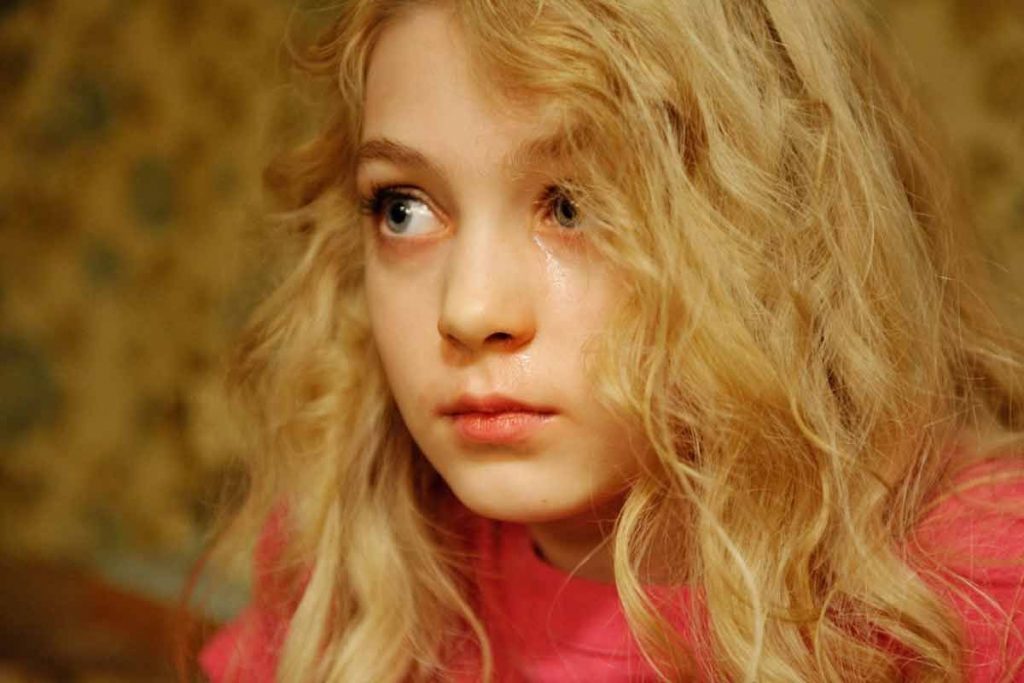
Anamaria Vartolomei began acting at just 10 years old in the film My Little Princess, directed by Eva Ionesco, a French director of Romanian origin. Her on-screen partner was none other than actress Isabelle Huppert, and the film premiered at Cannes in the Semaine de la Critique section.
Anamaria Vartolomei in My little princess/ photo: Sophie Dulac
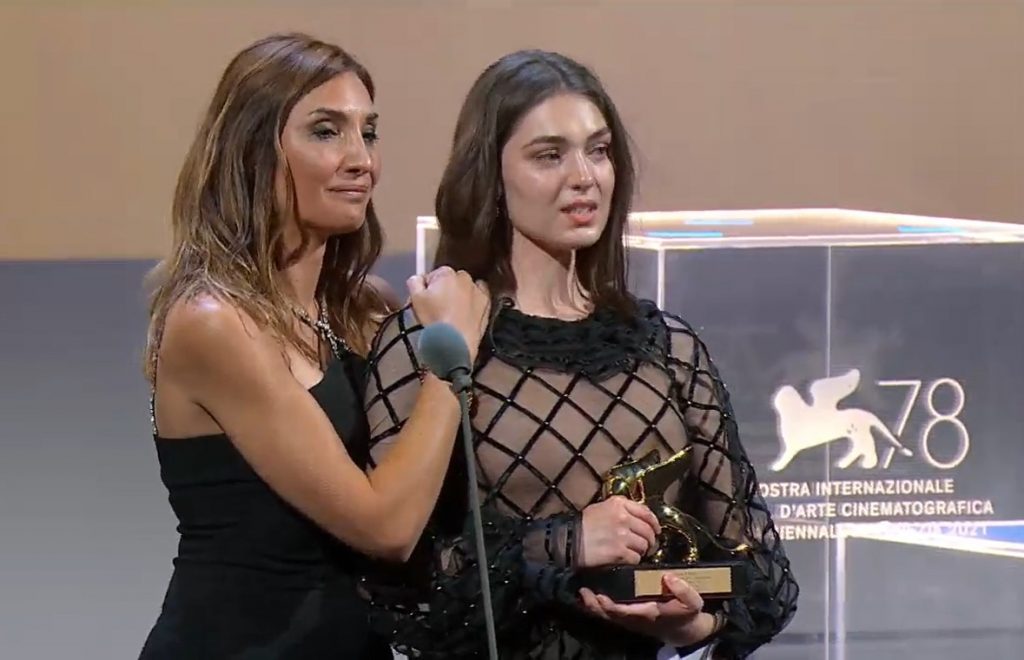
For her role, she was nominated in 2012 for the Lumière Awards in the most promising young actress category. In 2021, she won the Lumière Award for Best Actress and the César Award for Most Promising Actress for the film L’Événement (Happening), directed by Audrey Diwan, which won the Golden Lion at Venice.
L’Événement (2021) is an adaptation of the novel of the same name by writer Annie Ernaux (winner of the Nobel Prize in Literature in 2022), regarding her experience with an abortion when it was illegal in 1960s France. This was her first leading role.
“L’Événement, I think, remains, in a way, my business card. It’s the film that traveled the most, and in the United States, it was distributed right when Texas was banning abortion, so it had a much greater impact than we imagined.”
Director Audrey Diwan and Anamaria Vartolomei winning the Golden Lion in Venice / photo: screenshot from the Venice Biennale
After that, I received many offers, especially many related to abortion. In France, there’s a problem with labeling; if you do a drama, you only get drama scripts, if you do a comedy, that’s it, you’re pigeonholed as a comedy actor. And I didn’t understand why. I just made a film about a clandestine abortion, don’t these people want to see me in something else? So, it was very difficult for me to choose the right project afterward.”
What mark did winning the César Award leave on your career, on you?
“The César I received was for ‘female hope’ (espoir féminin), there’s a positivism that emanates from the award. People show you they have faith in you, and you, in a way, have to show them you deserve your place. What I mean is that the award also came with a kind of pressure and responsibility. That’s how I felt, on a personal level. I felt I had to show they made the right choice, but that was a personal pressure, not from the industry.“
“You always have this fear that it might be the last role, and you depend on many factors that you can’t control anyway.”
Anamaria Vartolomei, actress
At Venice, she was noticed by the jury president, none other than Korean director Bong Joon Ho, winner of 4 Oscars for the film Parasite. This led to the offer to act in his film, Mickey 17, alongside Robert Pattinson, Mark Ruffalo, and Toni Collette. It was her debut in English and with an American film crew, the movie being produced by Warner Bros. Pictures with a budget of nearly 120 million dollars. On the London film set, one of the executive producers was also present – Brad Pitt. Anamaria confesses that, at first, she felt awkward in this universe.
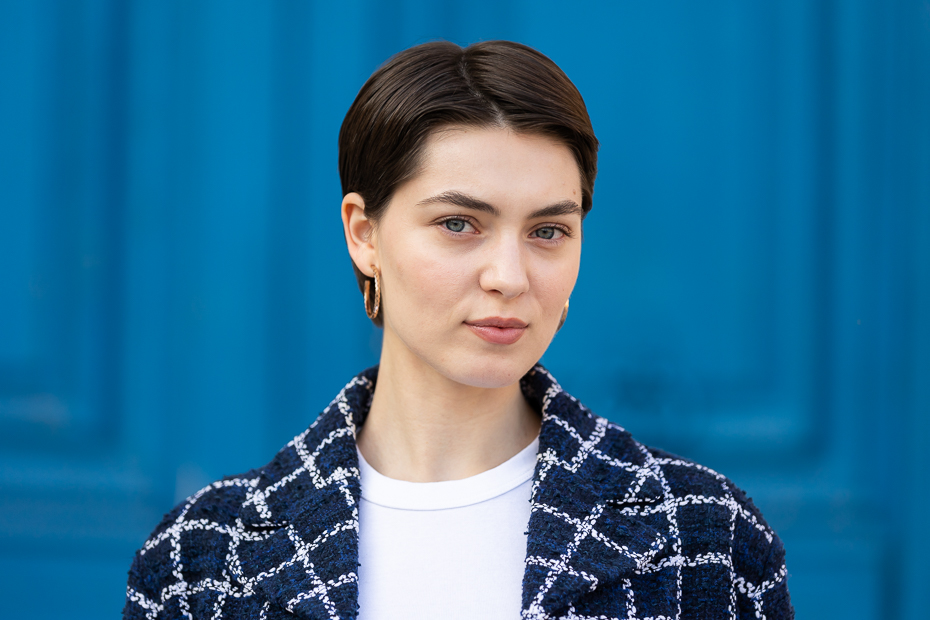
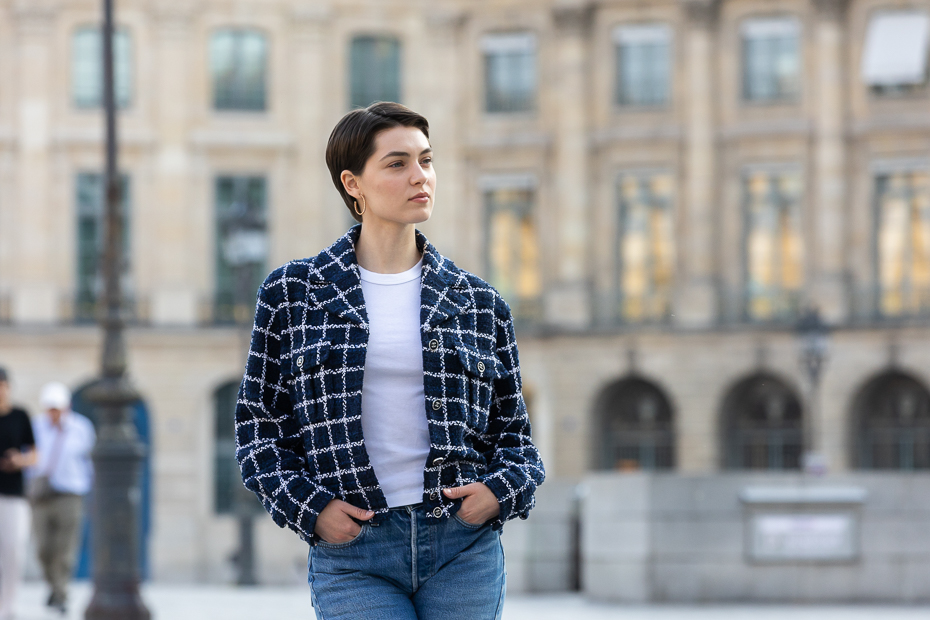
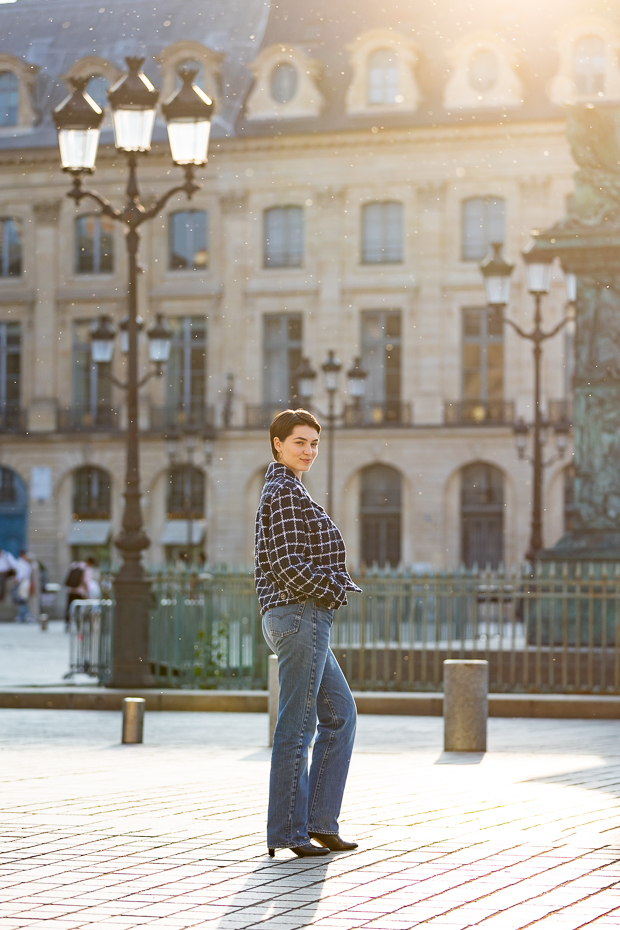
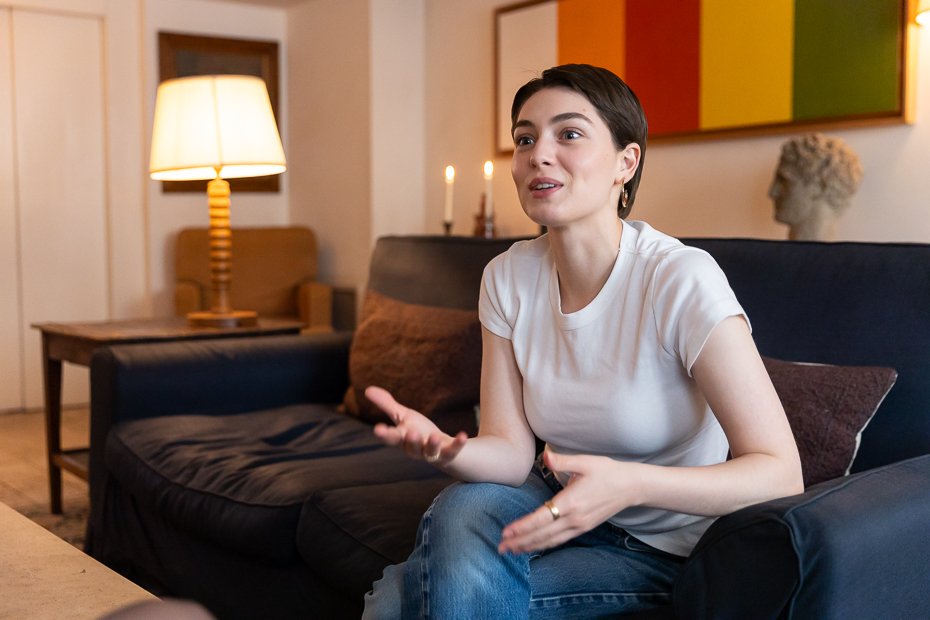
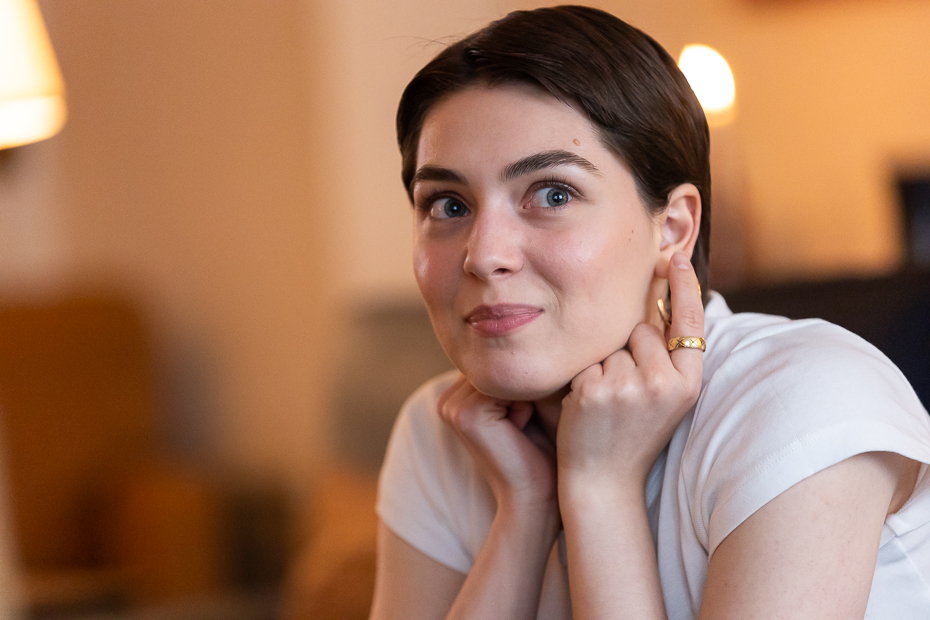
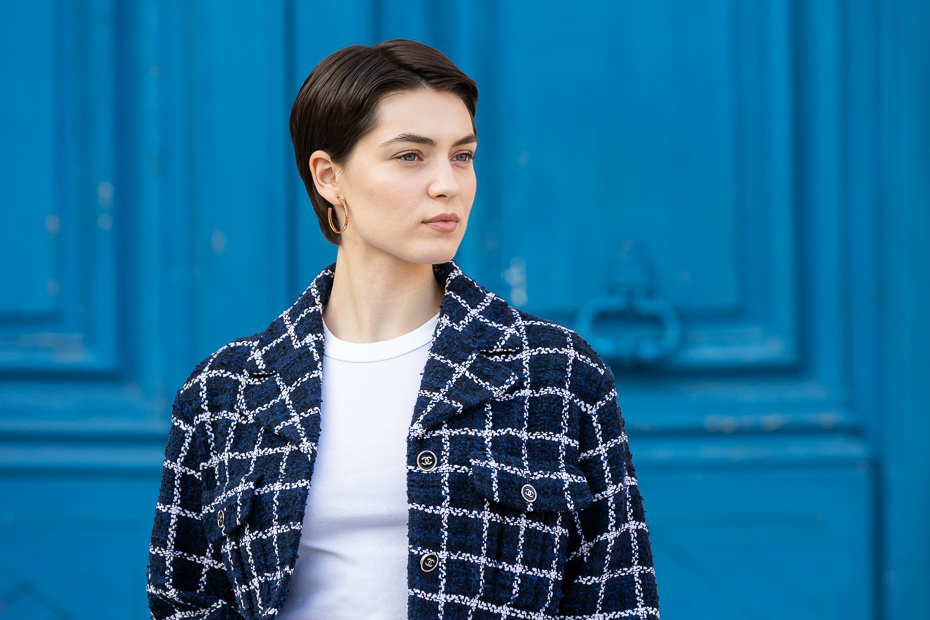
Anamaria Vartolomei in Paris, 2025/ photo: Bogdan Iordache, Cultura la dubă
“It was hard, first of all, because it’s not my language. I had a dialect coach. Bong was okay with my accent, but I wanted to perfect it. Being my first role in English, with such a good cast, I wanted it to be a kind of business card for the United States, so people could see I don’t have that typical French accent that confines you to all sorts of secondary roles as a seductive Frenchwoman.
The director was very nice. He didn’t want us to take the role into cliché at all. He let me work as I wanted with the coach and really helped me. He is very humble, generous, he’s like a child on the set.
At first, I didn’t feel like I belonged at all. Everything was so big. I had only worked with French crews, where you have about 30 people on the team and you know everyone. Then I found myself in a huge studio, and when I came out of it, I saw Ryan Gosling, because they were filming Barbie at the time. I got in the car and told the driver: ‘That was Ryan Gosling!’ But the man was used to it, it was normal for him; for me, everything was new.”
And here, in France, how is it?
“It’s not like that. I, for example, don’t like to be alone. I stay with the crew. Sure, sometimes you need to isolate yourself, but for a few minutes, an hour at most. But with Americans, each star had their status, they are isolated, that’s how they work.
And I, at first, suffered a lot because of this, I felt lonely, especially since I was the only French person. Afterward, I asked to stay on set. I thought, I don’t see these people every day while working, let me at least take advantage of it.
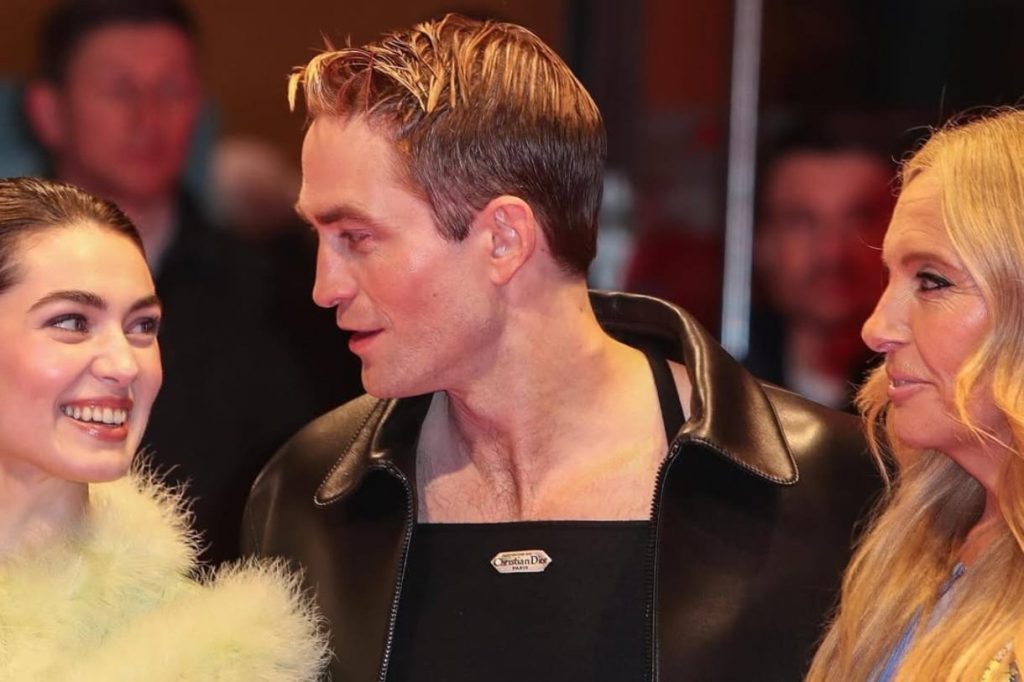
Anamaria Vartolomei, Robert Pattinson and Toni Collette/ Photo: Berlinale
In the end, it was okay, especially after I realized that if I only thought about my accent, I wouldn’t be focusing on the pleasure of acting, on the emotions. And I got used to the language, to the place. And, in the end, this wasn’t even a completely American experience. We filmed in London, with many Europeans, the director is Korean, and Mark Ruffalo even told me: “You know, it’s not usually like this.” Creativity and a more European manner were the priority.
How did you build the character?
We discussed a lot about how he imagined the character. He always directs you, he wants you to propose things, you have that freedom, he likes it when you let yourself be guided by your imagination, but he is very attentive to rhythm. Everything is precise to the millimeter, meaning if you have to put your hand on a cake at the three-second mark, you have to put your hand there at that exact moment. If not, you do it again.
He drew everything, he made a storyboard, and every evening he would send you each scene, drawn out, for what you were scheduled to film the next day. The film was already edited in a way; if I was drawn in profile, that’s how I was filmed, so everything was very precisely thought out.
What was the interaction like with your co-stars, who are so well-known in Hollywood?
Robert Pattinson was very isolated, but I think, being very shy, he was protecting himself in a way, especially since he had 80-90 days of shooting, playing two roles. I understood he needed to concentrate. But he is very nice.
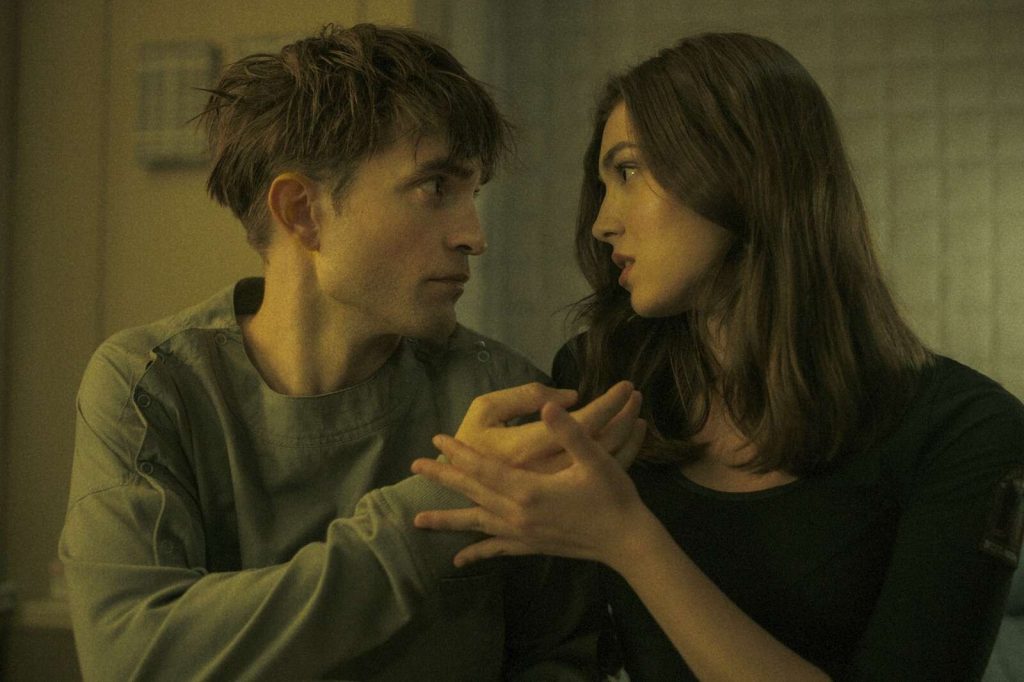
Robert Pattinson și Anamaria Vartolomei in Mickey 17/ Photo: Warner Bros
Mark Ruffalo is very cool, he would shake hands with every extra before and after playing the scene. I really liked him before I met him, and I liked him even more when I realized he’s genuinely a good guy. No airs, nothing. He also had his doubts sometimes, he wasn’t sure about what he was proposing. He was always a very agreeable partner, he motivated you, he encouraged you. For example, sometimes when we would leave together after we finished, he would tell me: ‘That was great, bravo!’”
Și te simțeai într-un fel, dacă Mark Ruffalo mi-a zis că am făcut treaba bună, înseamnă că e ok.
Did you leave that project with a different kind of self-confidence?
“No. I thought, now that I’ve finished filming, I’m going to be cut from the edit, hahaha. I lived with the fear that it was, after all, something too big for me. But ultimately, the impression is that they are two different industries. Americans dream of making films like us, with the camera on the shoulder, close to the emotion, without makeup, like we do in Romania, in Belgium, in France. They dream of that because it’s something totally different.
And we are fascinated by what we don’t know. I think we all have a desire to work with what we don’t know. Now I can say that I don’t necessarily have that dream anymore, of making films in America. Sure, I would like to, but I’m not so keen on it.”
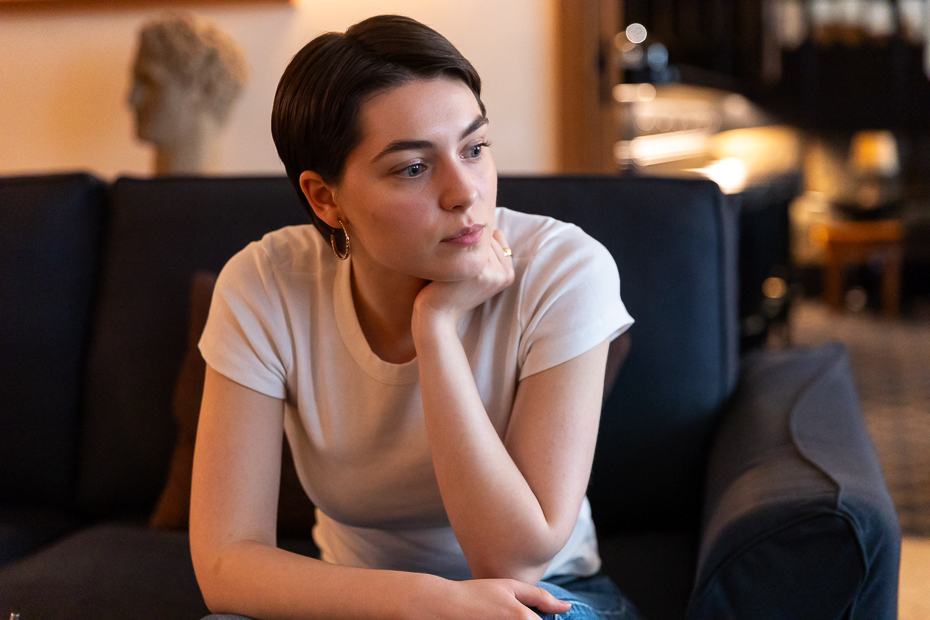
Anamaria Vartolomei in Paris, 2025/ Photo: Bogdan Iordache, Cultura la dubă
While her role in Mickey 17 was secondary, Anamaria Vartolomei impressed film critics with two other main roles: in Being Maria, directed by Jessica Palud, presented at Cannes in 2024, and most recently, the role of a young mother in L’intérêt d’Adam (Adam’s Interest), directed by Laura Wandel and presented this year, also at Cannes, in the Semaine de la Critique section.
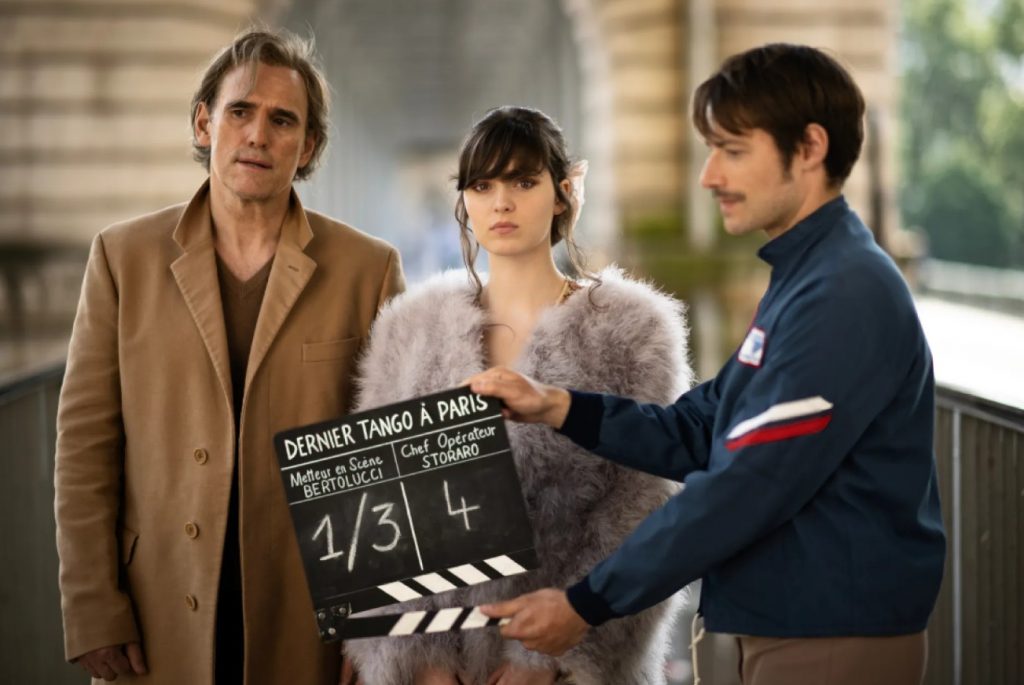
In Being Maria, Vartolomei brings to life the story of actress Maria Schneider, the victim of abuse by director Bernardo Bertolucci in Last Tango in Paris (1972) and by her famous co-star, Marlon Brando, now played by Matt Dillon.
“Filming Maria was very intense; it lasted 25 days because we didn’t have much money, and it took place in Paris and a little in the south of France. It was very difficult because it was a character role for me, very different from who I am. I worked a lot with Jessica Palud.
Matt Dillonandi Anamaria Vartolomei in BeingMaria/ Photo: Cannes Film Festival
Of course, we started to question the subject itself; you ask yourself questions, as an actress. Especially since I started acting when I was 10 years old. You realize, I was very protected by everyone, because I also had my parents with me, who aren’t from the industry and wanted to make sure everything was okay. I was very privileged, in a way, that nothing happened to me and I never had to deal with strange things or abusive people. Plus, since the #metoo phenomenon, the dynamics have changed, nevertheless. But when you dig deeper, you realize that these things still happen.
The fact that women speak out, that actresses speak out, matters a lot. There is also protection for minors on set. Now things are really changing and becoming mandatory.”
From this point of view, do you feel more comfortable working with female directors, with women?
“I never thought about the gender of the person writing a script, and my view of the world doesn’t depend on what I have between my legs…
Of course, it influences you in a way, but it’s a matter of sensitivity, first of all—of culture, of many other factors that make me see the world in a certain way.
I realize I’ve worked more with women than men, but I think that came naturally. When I read a script, I don’t consider whether it’s a woman or a man, but rather how they emphasize nudity. I question that more, if it’s necessary, how it’s filmed, how much is filmed…
“For me, it’s important that nudity has an artistic justification, that it adds something to the film, that we don’t do things gratuitously. That’s been done for years. Enough!”
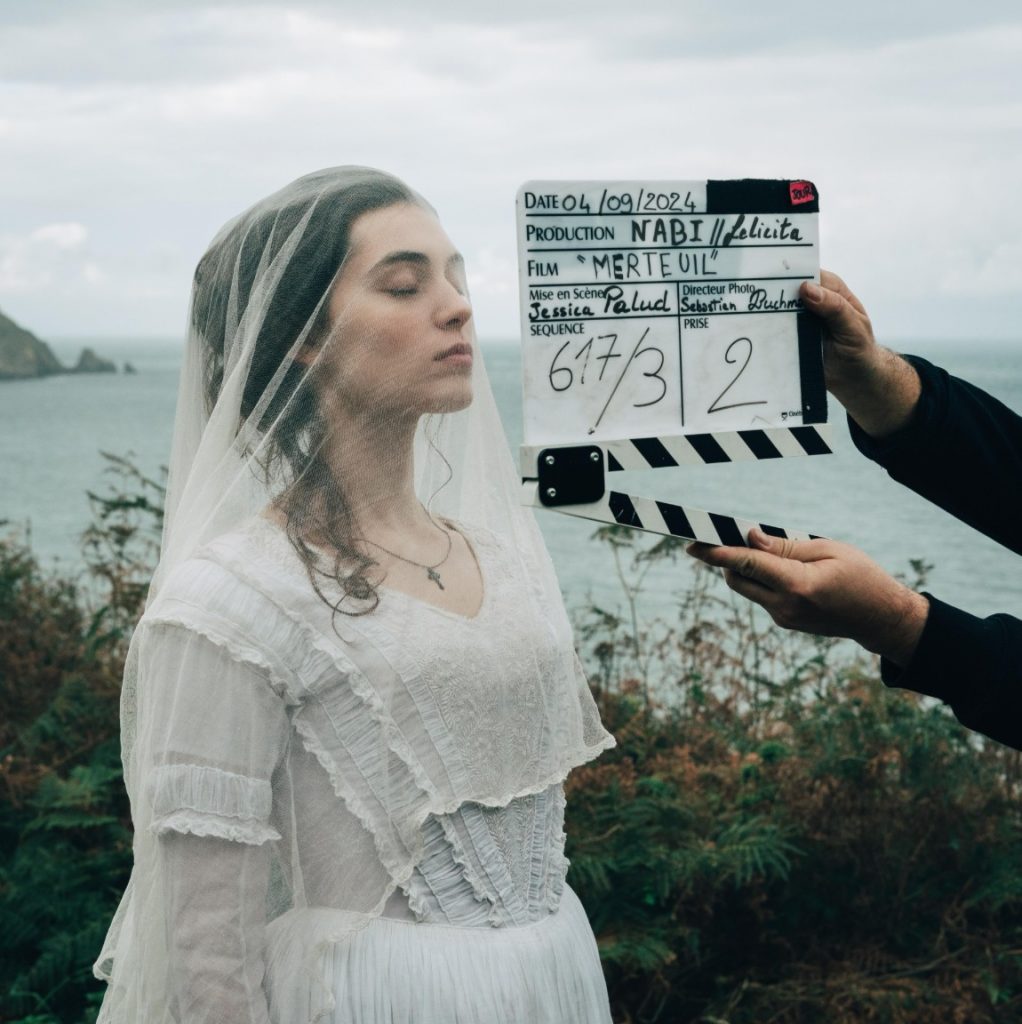
For example, with the Merteuil series, adapted from Dangerous Liaisons—which is, after all, an erotic book—it was interesting to see how, in 2024, you can retell the story in a more feminist way, so to speak, and to see what the director’s approach was. We all worked together, with the help of an intimacy coach; we discussed what was necessary and what wasn’t, what you’re comfortable with and what you’re not.”
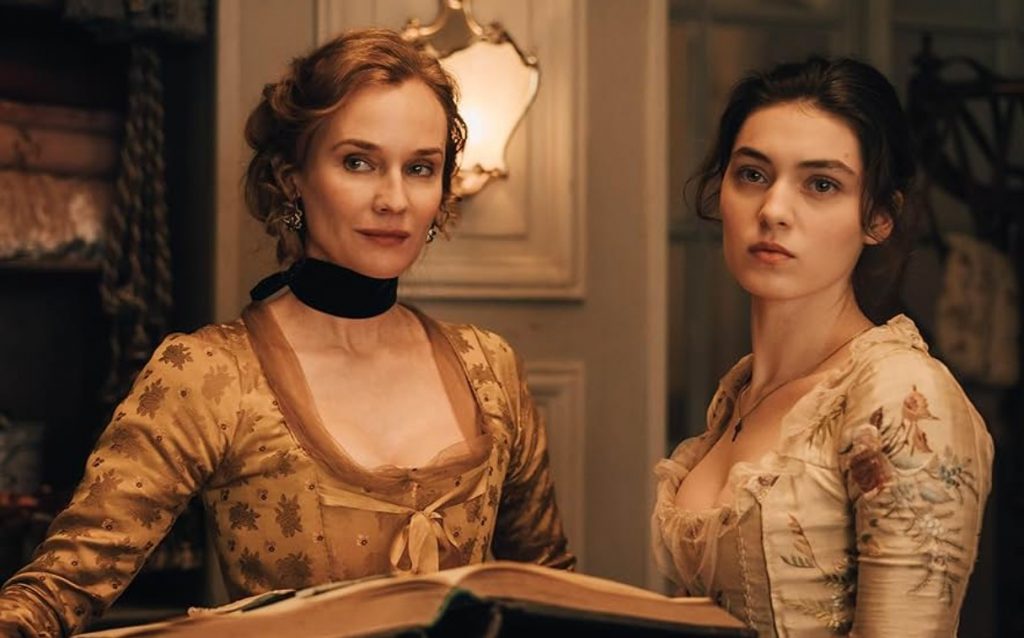
Anamaria Vartolomei in Merteuil/ Photo: HBO Max
The miniseries Merteuil will be released this fall on HBO Max and stars Anamaria Vartolomei, Lucas Bravo (editor’s note: who plays Gabriel in Emily in Paris), and the famous German actress Diane Kruger, known for Inglourious Basterds and In The Fade.
“Diane impressed me, she is a very magnetic woman, she has something spectral, something cold, German. I talked to her, and she told me she suffered a lot because when she was young and working as a model, it was hard for her to shake that image and be given a chance to show she can act. And she really can! She does some things in the series that truly impressed me. She’s an actress who works hard; she doesn’t mess around. With all her experience, she still wants to prove what she’s capable of. I found that vulnerability interesting—to still have doubts while playing a very complex role. And I learned a lot from her; on set, she is very focused, she’s technical, and she knows the script perfectly, even though it’s not her native language.”
Diane Kruger and Anamaria Vartolomei in Merteuil (The Seduction)/ Photo: HBO Max
“It’s a luxury to have access to these very talented people. Honestly, I think Mark Ruffalo impressed me the most. I’ve seen so many of his films, and he always seems brilliant to me. He also has something different from the typical American standard. He has something more sensitive. For them, it’s a very serious profession; they work a lot with coaches. In France, we rely more on spontaneity. In America, they prepare for the role more.”
After the premiere of the film L’intérêt d’Adam at Cannes, the publication The New York Times dedicated a special article to her with the headline: “Anamaria Vartolomei Brings a Fearless Note to Her Roles.” Variety praised the actress’s performance as “terrific.”
Anamaria Vartolomei in L’intérêt d’Adam/ Photo: Unifrance
In love with auteur cinema, Anamaria confesses that such difficult, but relevant, roles bring her the greatest satisfaction. She is at a point where she can choose the projects she gets involved in, and behind her decisions, there is both a strategy and an emotional side.
“Sometimes I choose by instinct; it has to be well-written, of course, to be constructed in a fairly controlled way, so I know I’ll be with someone who knows what they’re doing. Yes, the director’s name matters, but I am also very open to first films; that has never been an obstacle for me. Then, of course, the role itself matters, what is proposed to me, what they allow me to do, but there’s also a strategy involved.
I made many period films for a while. Should I do another one? No. I’ll do something contemporary. For example, I filmed The Count of Monte Cristo, then De Gaulle, which will be released in 2026, I was confirmed for Merteuil, then I spoke with my agent and told her I want to return to something that represents me more, an auteur, independent film. And, with God’s help, that very week, I received L’intérêt d’Adam. I really wanted to return to such a project, I was truly happy, I said: what a cool role!”
“It was a very difficult shoot; we filmed a lot in long takes, the role was hard, the story takes place over a single day, and you have to maintain the emotion for an extended period. It helped me a lot to act alongside Léa Drucker; she is such a good actress and a very kind woman!
It’s made by the people who also produced Anatomy of a Fall and by the Dardenne brothers. It was a combination that immediately made you think of a festival.”
“Ultimately, a festival is what we all hope for; it’s a showcase for the film and for the actors. The press is there, a lot of people are there, and if you get good press at the festival, it helps your career as well.”
So you try to choose your projects intelligently and hope that you’ll be there too,” says Anamaria Vartolomei.
In De Gaulle, a two-part biopic about the French general and president Charles de Gaulle, Anamaria plays the main female role – a heroine of the French Resistance. In fact, it’s noteworthy that almost all of her main roles portray different forms of female heroism.
In 2024, Anamaria also made her debut in the Romanian language. She is the protagonist of the film Jaful Secolului (The Heist of the Century), directed by Teodora Mihai, from a screenplay by Cristian Mungiu. The story is based on the case of Romanian thieves who stole famous paintings by Van Gogh, Picasso, Gauguin, Matisse, and Monet from the Netherlands, then burned them. In the film, Anamaria Vartolomei is Natalia, a young mother who went to work in the Netherlands to offer her daughter, left at home with her grandmother, a better life. For this role, Anamaria received the Best Actress Award at the Tokyo International Film Festival.
“I was nervous because, after all, I have a slight French accent, and Mungiu told me so. We tried to work together to erase it as much as possible. I act differently in French, I act differently in English, and I act differently in Romanian. It’s never the same way of interpreting, of questioning, of bringing characters to life.”
Did this experience bring you closer to your roots in any way?
“Yes, totally. And especially the film, being a story that is close to my parents’ journey, who also left when I was little, they worked in France to bring me there…
For me, it was a very intimate way of talking about an experience that is, in fact, universal, but for me, it had something very personal.”
“What other projects would you like to do? Is there a specific director you would like to work with?
I’ve made a sort of mental list of people I’d like to work with, but it’s not limited to that. Sometimes you have directors who are just starting out and they propose a brilliant script. I’d like to continue making films in France, to make more films in Romania, in America, in England.”
Anamaria Vartolomei in Paris, 2025/ Photo: Bogdan Iordache, Cultura la dubă
Beyond a brilliant career on the big screen, Anamaria Vartolomei is also an ambassador for the house of Chanel. All of her red carpet appearances have been provided by Chanel ever since she was just a child.
“How do you feel in the world of Chanel, when you go to their events, when you wear their outfits?”
“It’s strange to say this, and I don’t want it to sound pretentious, but I feel at home, because I started working with them when I was 12 years old; I grew up with them. We have a professional relationship, but we also have a very human one, a rather beautiful relationship of loyalty; they even know my family.
They are loyal to the people they work with, they keep them, they hold you dear to their hearts, they try to bring you closer to them, to do great things together.”
Everything concerning her career and her image is now handled by three specialists: a film agent, an image agent, and a person dedicated to PR. They advise her on making the best decisions regarding the films she acts in, the events she attends, and the interviews she gives.
Anamaria Vartolomei in Paris, 2025/ Photo: Bogdan Iordache, Cultura la dubă
“First of all, you have to know what you want. If you want to appear everywhere and you enjoy it, okay, that’s great; there are many actors who do that.
I, in general, prefer to stay withdrawn. The less I am seen, the better I feel.
But there are also events I want to go to and it’s nice; I have the opportunity to meet people from the industry whom I wouldn’t meet otherwise. For example, I went to a dinner organized by Madame Figaro magazine, a magazine I appreciate and for which I’ve done two covers, and Coralie Fargeat, the director of the film The Substance, was sitting in front of me. I was happy to meet her.
When you’re not working, what do you like to do?
What all normal people do in their free time. Yes, sometimes, when I’m between projects, I get bored, especially if my friends have fixed-hour jobs and are at work, but I go to the movies, I take walks, I do sports, I read a bit. But even when there’s no filming, there are promotional periods, and those require availability, both of time and emotionally.
Anamaria Vartolomei in Paris, 2025/ Photo: Bogdan Iordache, Cultura la dubă
“Are there also negative sides that come with your profession?”
“Yes, doubts, uncertainty, you don’t really know what to expect. It’s hard to make a place for yourself, but I think it’s even harder to maintain it. You have to have a strategy, but also remain spontaneous, preserve your personality, enrich your imagination. But sometimes it doesn’t depend on you, and I think the hardest part is to think that you work for nothing, that it’s useless to be good, to be serious; sometimes when it’s not meant to be, it’s not meant to be, and when it doesn’t catch on, it doesn’t catch on. So I think that’s the hardest part.
I spent my entire adolescence going to castings; I compared myself a lot to the other actresses, other girls. And when you’re developing as a woman, especially during adolescence, it can be very toxic.
That was pretty hard for me. When you don’t have the necessary maturity, the first thing that comes to mind when someone else is chosen instead of you is to ask yourself what you’re missing. You think she’s better, especially when it’s a person very different from who you are; it makes you compare yourself a lot. But that changes with age.
Anamaria Vartolomei in Paris, 2025/ Photo: Bogdan Iordache, Cultura la dubă
I would say this profession has developed a kind of constant competition; you become competitive. A friend once told me: ‘Anamaria, life is not a casting,’ and it made me change my mind. Indeed, you don’t necessarily have to succeed at everything, to be the best. In your personal life, I think we can allow ourselves to be more vulnerable, to fall, to get back up. That also makes you grow and develop as a person.
It’s important to allow yourself not to be perfect, not to be what the world expects you to be.
A few years ago, you closed your Instagram account. Why did you choose to step away from social media?
Because it was too toxic. People post what they eat, who they go out with; that developed a rather unhealthy curiosity in me. Curiosity, for me, is a very important quality, but that was a misplaced, harmful curiosity. I didn’t like what it was producing in me. Then yes, there were the comparisons. I wanted to be like this, to be there, like others. You become frustrated, and it felt like it was degrading me a bit.
So even for you, a successful, beautiful person, social media caused you to have doubts?
Yes, I think it happens to everyone. I don’t think there’s anyone who doesn’t compare themselves to someone else. The grass is always greener on the other side of the fence.
Anamaria Vartolomei in Paris, 2025/ Photo: Bogdan Iordache, Cultura la dubă
Then, as an actor, to use it for self-promotion seems strange to me. I wasn’t comfortable posting pictures of myself, saying: ‘look, I did this.’ Okay, there are people who handle promotion, but for you to do it yourself seems a bit strange to me.
What does your PR agent say about that, does she agree?
She has nothing to do with it; no one can force you. I know there are brands that impose it. For example, there are actors and actresses who would have liked to leave social media, but because they have a contract with a brand, they have to post pictures of what they do for them.
Has it ever happened that you missed out on a contract because you didn’t have a social media account?
No, Chanel doesn’t require that.”
Anamaria Vartolomei in Paris, 2025/ Photo: Bogdan Iordache, Cultura la dubă
In her next project, the film Miles & Juliette, she will play the lead female role. Mick Jagger, the lead singer of the Rolling Stones, will produce the film through his company, Jagged Films. The film will tell the story of the famous jazz musician Miles Davis, who travels to Paris in 1949 at the age of 22. There, he falls in love with Juliette Gréco, a French singer and actress, played by Anamaria Vartolomei. The cast will also include Xavier Dolan.
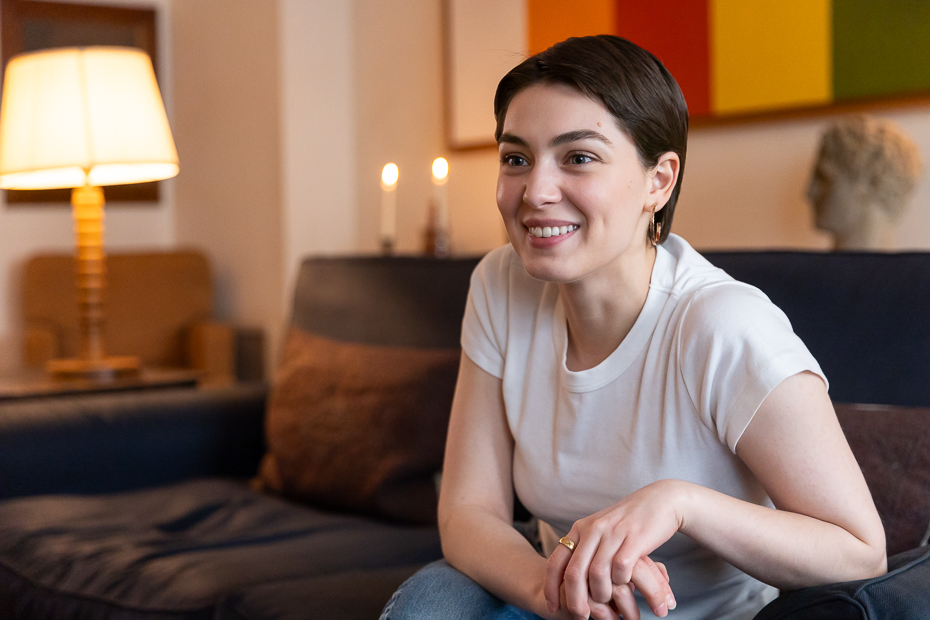
It’s all the more impressive for us that, among so many important collaborations, Anamaria accepted a new interview for Cultura la dubă. “Of course, how could I not? You were the first to tell my story in Romania,” she says with a smile on her face.
Anamaria Vartolomei in Paris, 2025/ Photo: Bogdan Iordache, Cultura la dubă
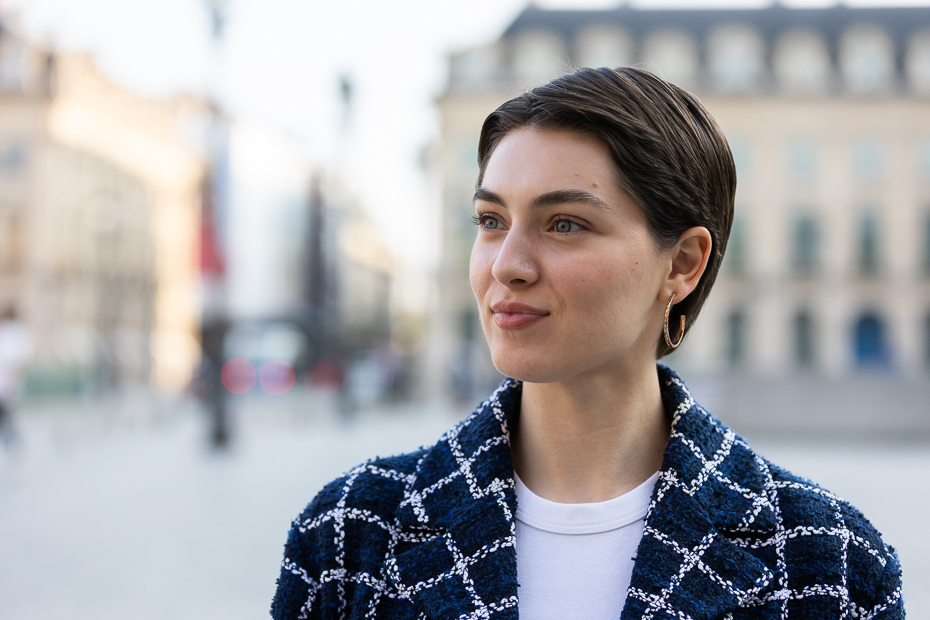
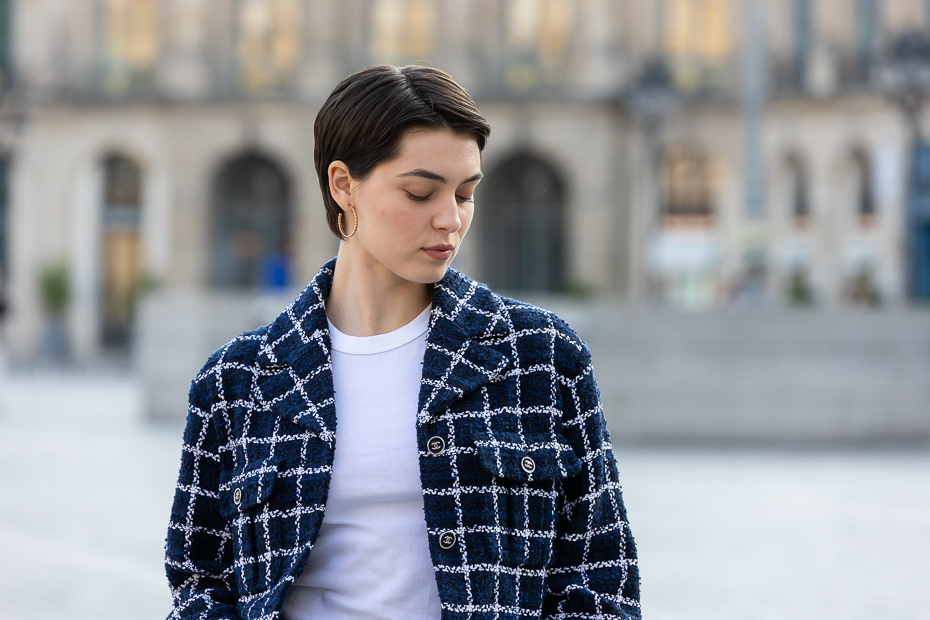
At our meeting, she wears a Chanel suit as naturally as can be, with a pair of jeans and minimal makeup. She has the natural charm of a Frenchwoman, but her ease and sociable nature have more to do with her Romanian roots. In her family, in Paris, they speak predominantly Romanian, and Anamaria continues the tradition of going to the Orthodox church on Sundays.
What do you feel still connects you to Romania? Do you still feel a sense of belonging?
Yes, the more I grow, the more I feel it. For example, now, during the elections, I went to vote. I also feel a responsibility as a Romanian from the diaspora.
We, those of us here, also contribute to what Romania means, I realized that from the election results. Just because we are not there doesn’t mean the country no longer belongs to us.
It’s up to us to manage to maintain a balance and lead the country towards what we can see here, as an economic, political, social, cultural model. We have a very rich country and it’s a shame it’s not developed enough. I feel quite responsible for what happens there and I try to stay connected.
When I filmed The Count of Monte Cristo, they came up with the idea for me to speak Romanian and I thought it was very beautiful, I was proud. It’s important to showcase your country, to show people that we are more than just a few clichés. After all, we have so many talents… And through your project, at Cultura la dubă, we see how many talents Romania has, who are doing important, difficult things. We must be proud of this and act in such a way that there are more and more of them.
Anamaria Vartolomei in the Count of Monte Cristo
I’ve seen that in interviews you give abroad, you say you are from Romania.
“Yes, of course. I like that Chanel now, when they post something, writes ‘French-Romanian actress,’ because that’s what I am in the end. I have never tried to erase it, to pretend I’m just French, because that’s not what represents me.”
***
This article is part of the “France Week” series, an initiative by Cultura la dubă supported by BNP Paribas. So far, within this project, Cultura la dubă has presented the stories of 22 Romanian artists and cultural figures based in France.
Susține platforma noastră de jurnalism independent printr-o donație:
Marina Minoiu era prim-solistă la Opera Națională București în 2016, la momentul scandalului care zguduit această instituție din temelii. A dansat în roluri la care…
Tate Modern, cea mai mare galerie de artă contemporană din Marea Britanie și una dintre cele mai importante din lume, expune lucrările artiștilor români Paul…