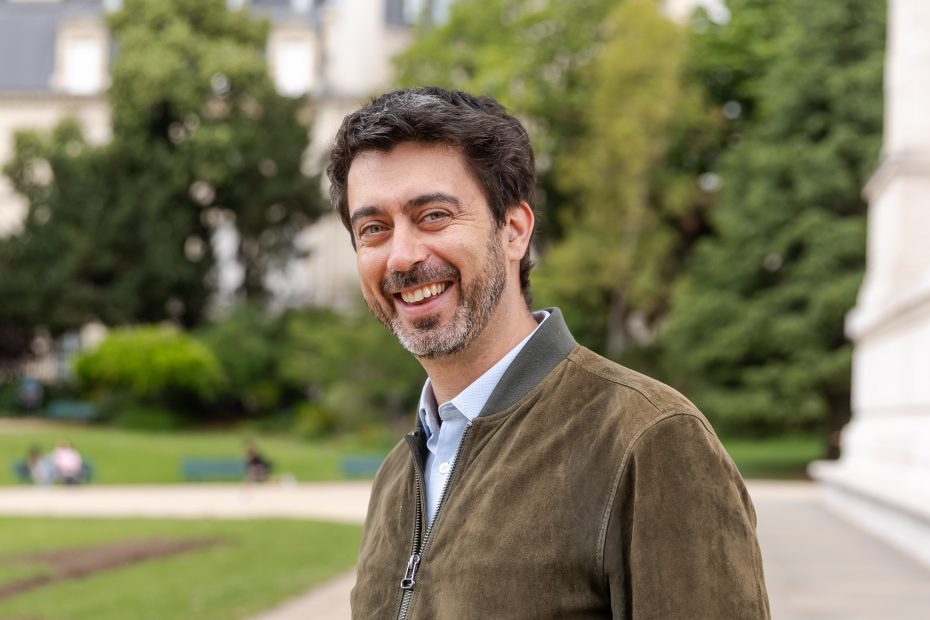
photo: Bogdan Iordache/ Cultura la dubă
While the Romanian language is increasingly less mastered in vulnerable environments with high dropout rates, and on the other hand, Gen Z youth feel they can express themselves better in English than in Romanian, Sylvain Audet-Găinar’s story is the exact opposite, one of fascination for the Romanian language.
The Frenchman Sylvain Audet loved his wife and her family from Romania so much that, completely of his own free will, he thought it only natural to take the name Găinar, knowing full well the meaning of the word.
A teacher of French as a foreign language, Sylvain lived in Romania for a few years and fell in love with our language. He started writing about Romanian expressions and proverbs and recording clips for social media. He quickly and unexpectedly gained popularity among both Romanians and the French.
“My goal was that when we had a child, I would be able to understand my wife’s language when she spoke to our kid. It was incredibly important to me that there wouldn’t be a disconnect, an imbalance, or even a cultural hierarchy,” the author explains.
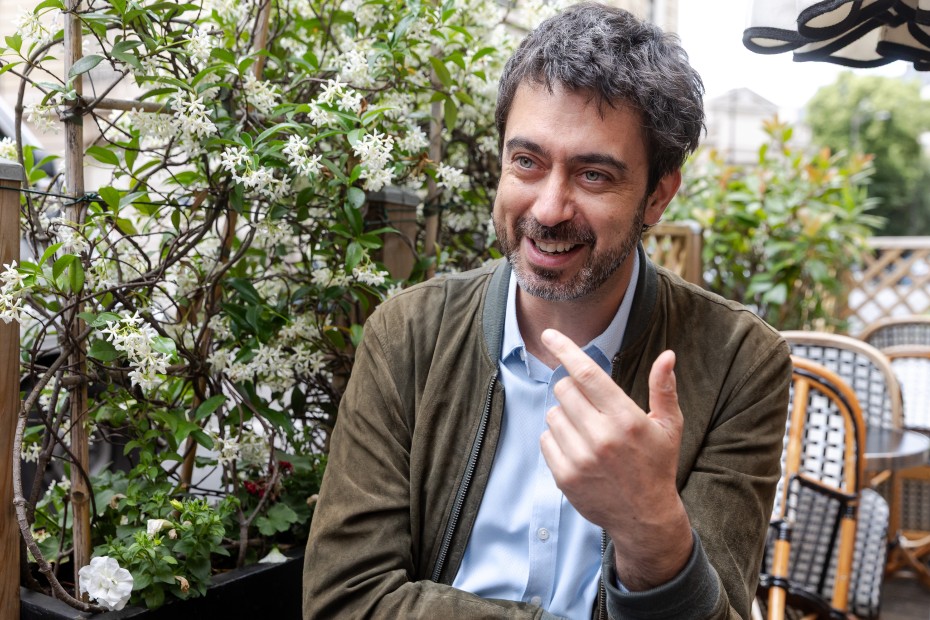
Today, their son speaks both French and Romanian equally, and Sylvain Audet-Găinar is working on a Romanian language textbook for French speakers. We met him in Paris, and he told us his story, with the entire conversation taking place exclusively in Romanian.
***
Sylvain was born in a rural area near Lyon. He went to high school in the city, which would change his personal life and map out his path toward a career in linguistics.
“My high school was partnered with a school in Târgu Mureș. So, when I was in the tenth grade, they suggested I become pen pals with someone from Târgu Mureș. For a few years already, I had been very drawn to this country because when I was 9, I watched the 1989 Revolution on TV and it shocked me. Those images really stuck with me, everything seemed so cruel, so strange. I didn’t understand, like, is this what a real revolution looks like? It wasn’t idealized like what we learned about revolutions in school.
So, when I was in the 10th grade and they offered me the chance to write to someone there, I gladly accepted. I received the address of a girl named Maria Găinar. Today, she is my wife.”
“We started writing letters to each other in French, because I didn’t know a single word of Romanian back then. I didn’t even know how to pronounce the name of the city. After two years of corresponding, we were supposed to actually meet, the Romanian students were going to visit us, and we were going to go there. But the exchange fell through because we were the only two still writing to each other. The others weren’t.
So I waited a year, started university, and saved up money to pay for a plane ticket to finally see her.
Did you send photos to each other? Did you know what she looked like?
Yes, but back then, photos were very rare and sometimes older. It took time to get a picture taken, or it would get lost. I think in the photo she sent me, she was a few years younger than she was when we actually met.
It wasn’t like the days of WhatsApp, where you send a picture in a second. And when I went, I stayed for a month.
At her place?
Yes, her parents agreed to it. She invited me to come over because of the Solar Eclipse. And that’s pretty much how I entered the Romanian world.
And you fell in love with Maria, basically.
Exactly. I genuinely fell in love with her, but also with her language—the way it sounds, the way it’s hard to quite catch. It feels like such a playful language that it makes you want to learn it, just to reach a level where you can have fun with it too,” Sylvain tells us with a smile on his face at a café in Paris.
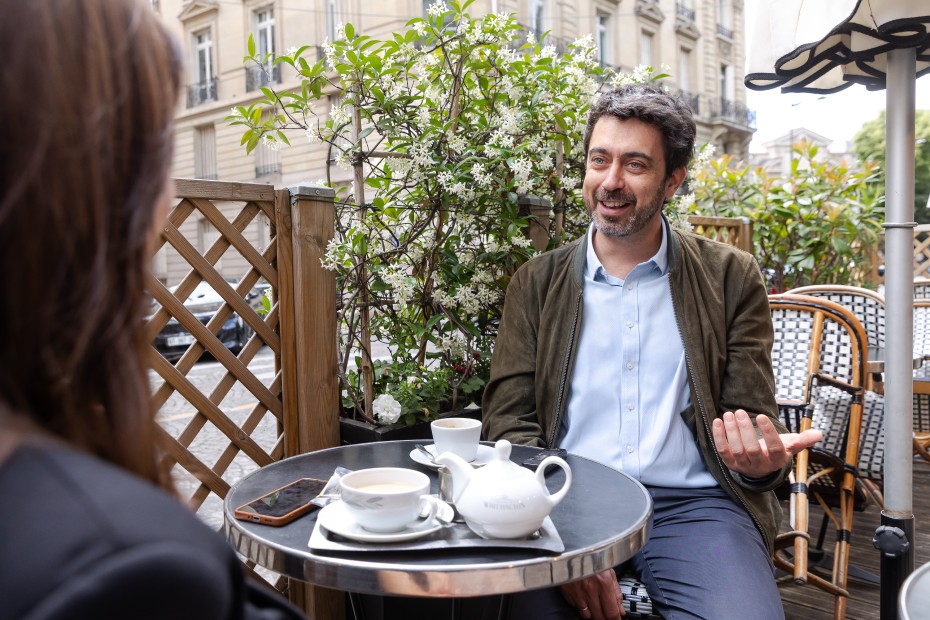
Back then, he was a Literature student studying French and comparative literature. To be closer to Maria, he signed up for an Erasmus year at the Faculty of Letters in Bucharest. Later, she got a scholarship in Strasbourg, and they both moved to France.
“I finished my studies there, and she did her PhD there. And we started moving back and forth between the two countries. I worked for the French Embassy in Romania, then in Sibiu, and in Cluj. At some point, I got a position in Bucharest, and our child was born in Bucharest.
I became a French teacher for foreigners. That’s what I did for many years. I was a French lecturer at the ‘Lucian Blaga’ University in Sibiu, but I also taught at the kindergarten of the French High School in Bucharest. I really loved it; I worked there for four years and it was a lot of fun. I liked this job because I worked with very different profiles, with very young children who couldn’t read yet, so I had to come up with very creative games and activities.
And I also worked with adults, sometimes with very little education, even illiterate—that was in Brussels.”
Was Maria your Romanian teacher, or were you self-taught?
“I was partly self-taught, but she also helped me a lot. Maria used to read to me when I was a beginner. I would ask her to read to me in Romanian. She read me the entire Harry Potter series, for example. I learned a ton of words. Though, mind you, not all of them are very easy to use in everyday speech. ‘Cauldron’ (ceaun), for instance, I haven’t really used since then, hahaha. Or ‘owl’ (bufniță).”
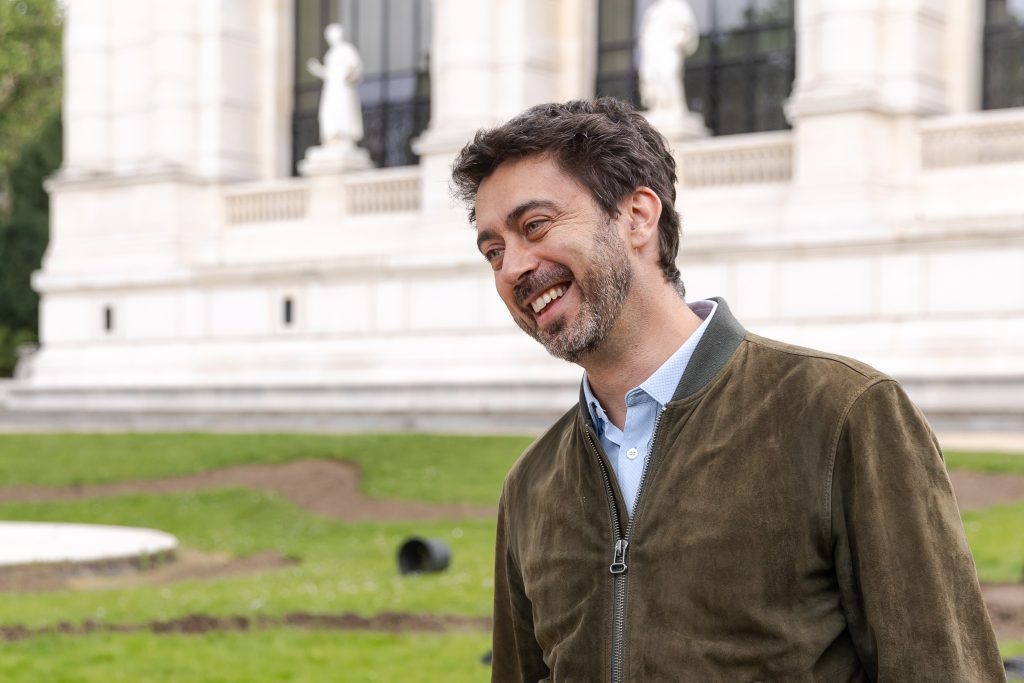
When we met Sylvain in Paris, he and his family had just returned from a funeral in Romania. Half-joking, half-serious, he knows exactly what an “alms” means.
He is incredibly attached to our country and his family here, and his interest in the Romanian language naturally evolved toward writing and translation.
“I started translating from Romanian into French, but I got a bit tired of translating other people’s books and figured I’d be better off writing my own books exactly the way I wanted. That’s how I started writing. I was living in Bucharest at the time, and my wife was pregnant. We had just found out we were having a boy. I was at an antique bookstore and stumbled upon a small, anonymous photo.
It moved me deeply to see a picture of a 4 or 5 year old boy whom I knew nothing about, whose life story no one was telling. I was thinking about our own boy and decided I wanted to tell him the history of Romania, and try to give that child in the photo a story of his own.
That’s how I started writing a detective novel. It felt like the most suitable format, given the mystery of it all. And I wanted it to be funny too, because that’s just my personality.
I started reading those chapters out loud, but it was actually a family novel. I would read a chapter every time we went for an ultrasound checkup. Then I started making such good progress that I realized it was becoming a real book, and I actually ended up writing a trilogy.”
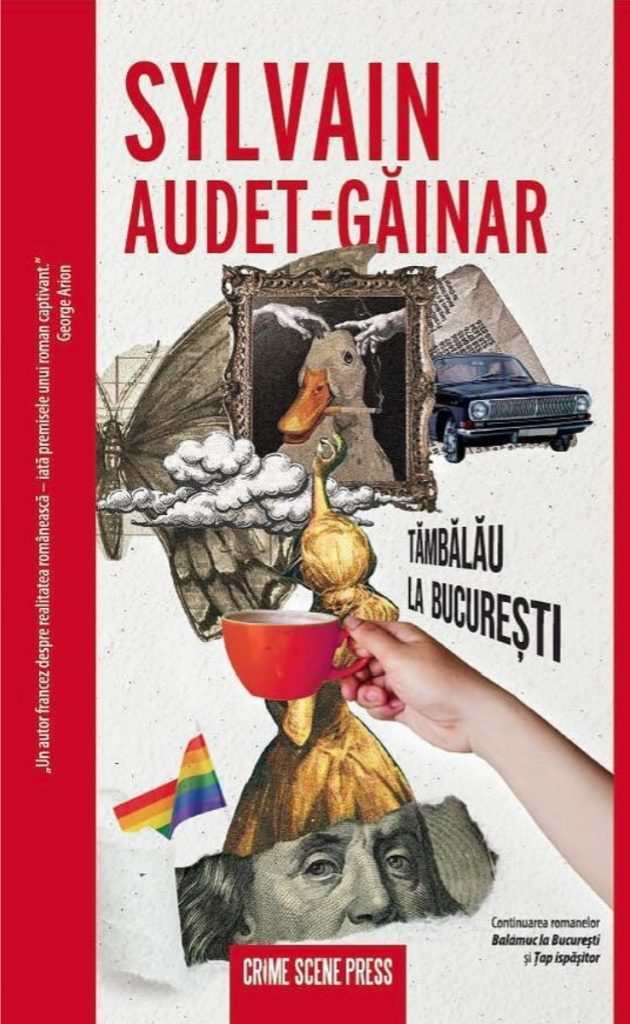
The three novels written by Sylvain Audet-Găinar, inspired by the photo found in the antique bookstore, have been translated into Romanian: Tămbălău la București (Ruckus in Bucharest), Țap ispășitor (Scapegoat), and Balamuc la București (Madhouse in Bucharest).
His most recent book, launched right at the Romanian booth at the Paris Book Fair, is a volume about 80 Romanian words, explained in Sylvain’s signature style – “80 mots de Roumanie.”
“The format of this book is very strict. It is a series of 10 volumes, and Romania is the 10th one. You have to choose 80 words from a language, and each word gets a text of 2,500 characters maximum. So it’s a huge stylistic constraint. The publisher told me to make it more about myself. And I had a lot of stories to tell.
For example, I talk about it in the first chapter: when I was 19, I went to Bucharest, transitioning from being a teenager to a man. And I used to go get a shave because I liked being surrounded by Romanian men, to understand culturally how the Romanian way of being a man works.
And from there, I start explaining from my point of view what it means to be a man in Romania. So each word is actually just a pretext.”
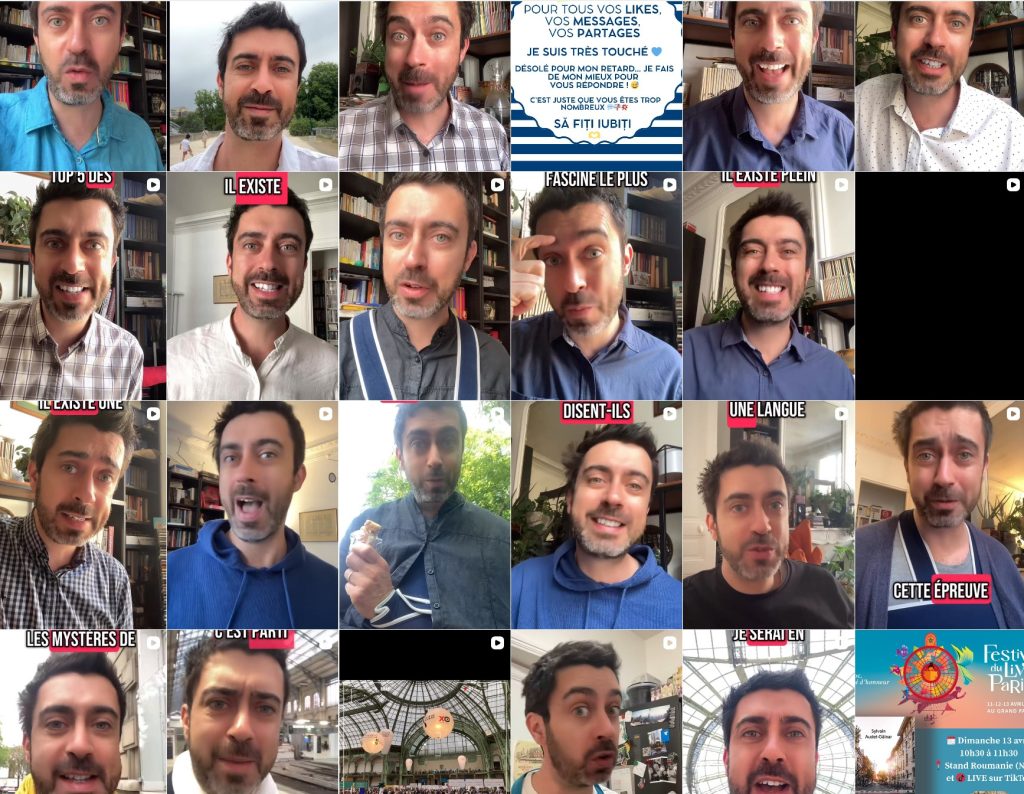
Sylvain’s connection to Romania spans over 25 years now. It began in a communist-era apartment in Târgu Mureș and now encompasses a rich linguistic universe, a Romanian-French son, and a community of over 20,000 people who follow the funny clips the author posts on Instagram.
“What were the first things that amazed you about Romania?
The carpets, for example. I found it amazing.
The ones on the walls or on the floor?
Hahaha. On the floor. Then the sheer curtains. The smell in the building’s stairwell. The sound of cars when they put it in reverse. How could I, a country boy from France, look at a communist apartment block in Romania? I talk about this in the book. And actually, the book isn’t just about me. That’s what I found very interesting as a writer, that I was like a vector for an analysis. I try to bring a fair, honest look at Romanians, at Romania, something balanced.”
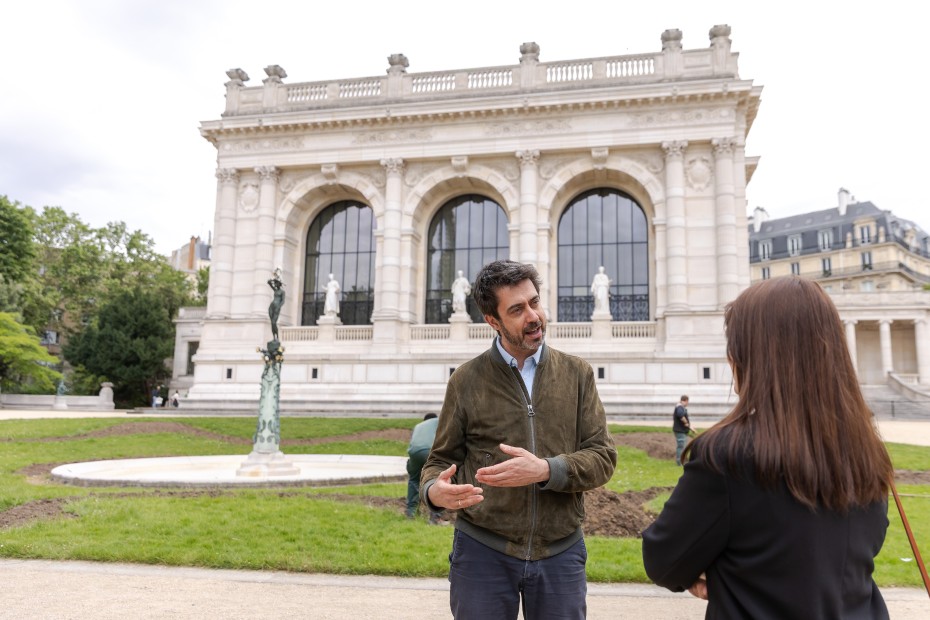
“How did your family and close friends react to you falling in love with Romania back when you were 19 or 20?
My folks worried when I left for Bucharest for a whole year. It was one thing to go for a month to see your pen pal, and another to be gone for a year. I couldn’t afford to come home often back then, and phone calls were expensive. I would call once every two weeks, and other than that, we wrote letters, I actually kept them.
I have really great parents; they didn’t project their fear onto me. They only told me after I got back: ‘Wow, we’re so glad you’re back, because we were actually scared for a year.’ Either way, I had parents who let me grow up pretty free. They didn’t restrict me too much. That’s the advantage of living in the countryside. You have space, go figure it out. That was pretty much their philosophy on life. And I’m grateful they didn’t box me into a specific way of looking at things. That was my luck. I was also lucky that I met my wife at 19 and that we were actually able to grow up together. We became adults together.”
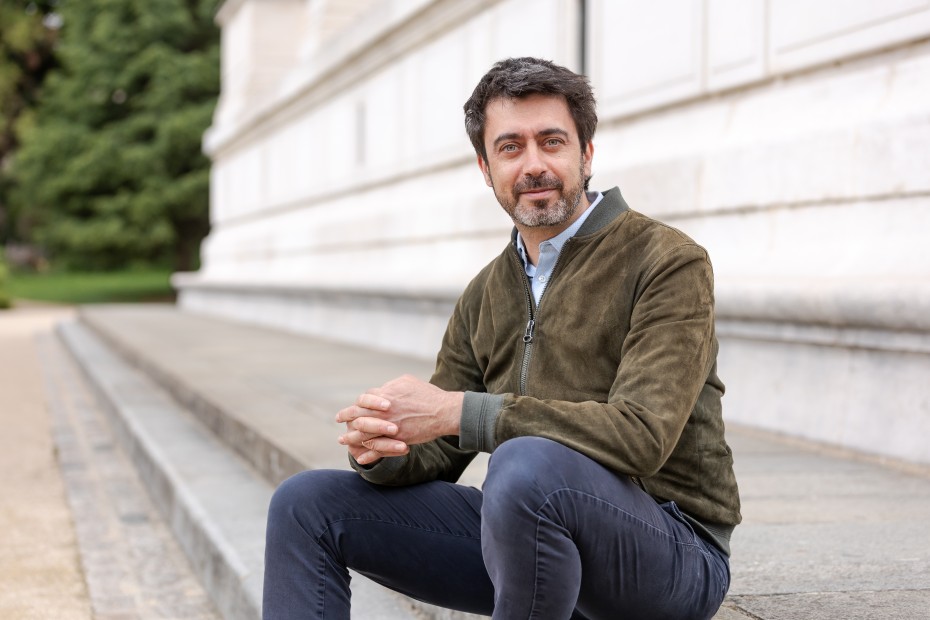
“Did Romanian literature help you get closer to the Romanian language?
Yes, I read Romanian literature too. At the beginning, I was actually quite ambitious. My first book was Enigma Otiliei (Otilia’s Enigma). I don’t know why, but I found the title very catchy. I regretted my choice after 20 pages, but I pushed through to the end and ended up loving it. I think I didn’t understand 50% of the book, but I loved the atmosphere.
Then I started reading contemporary literature. Lately, I really like Lavinia Braniște. She is super, super talented, and I had the honor of translating her book Camping into French, it’s coming out in September.
And right now, I read a lot of children’s books for our son. We laugh out loud together.
When I look back at the beginning, I know I started writing literature so that my son would have reference books and learn about his culture and history for pleasure. Now he is very proud that he was born in Bucharest, and all my fiction books have the word ‘Bucharest’ on them. It was incredibly important, symbolically, for me, so that it would be something symbolic for him too.”
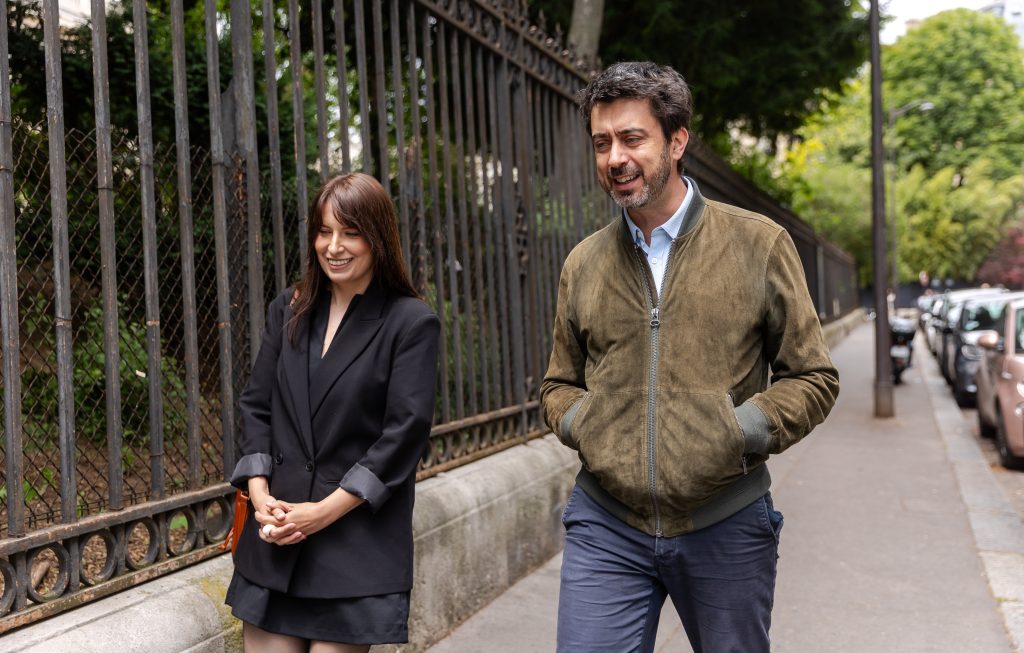
“But slowly, surely, I realized that what I was saying was also very useful for others. I started making the videos just to entertain myself. Then I realized a whole movement had started. People actually began sharing them with friends and colleagues. Some French people would tell me that, for example, on Monday mornings over coffee, they watch Sylvain’s video to teach their colleagues about the Romanian language. French people in mixed couples.
Or that the videos are important for some Romanian children living in France who hadn’t learned Romanian because they felt it was just an extra, useless language.
Now, every time I meet Romanians in the diaspora, I find out that these videos have, for instance, made kids actually want to speak, to learn strange and funny expressions. And now I feel a sense of responsibility; every time I post a video, I know people will watch closely and feel encouraged. People leave very long comments giving me all kinds of ideas or expressions I’ve never heard of in my life. I read them eagerly, linguistically and humanly speaking, it really feeds me intellectually.”
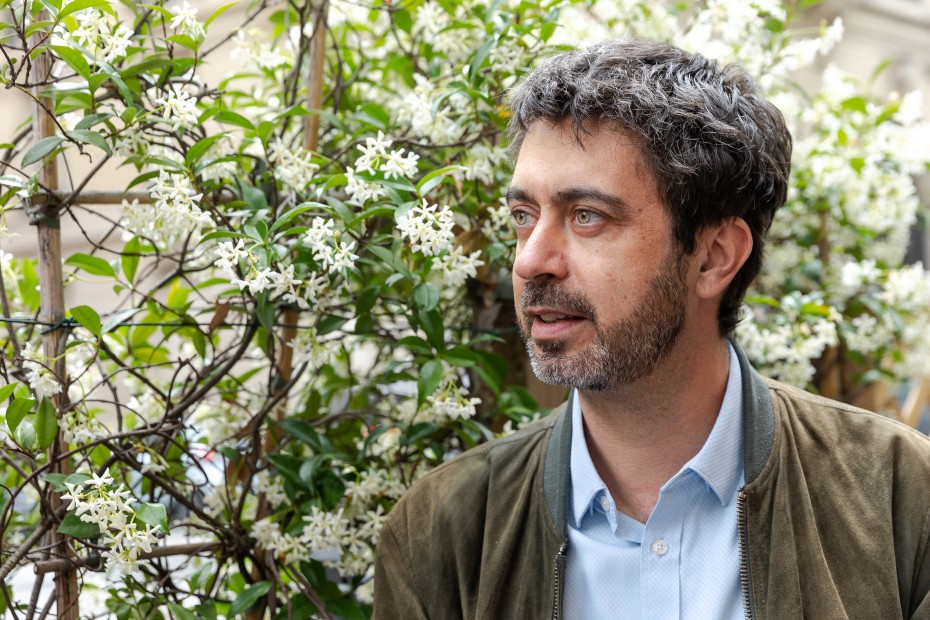
Sylvain confesses that he does, however, have one regret regarding the Romanian language. From one year to the next, he notices that people’s vocabulary is becoming increasingly limited, whether due to social media consumption or because they don’t read as much as before. In fact, the decline in reading interest is felt even in France, the heart of European culture.
“I’ve been able to observe the way people’s lexicon, their vocabulary, has shrunk. At one point I thought, okay, maybe it’s because I master the language well enough now and I’m just getting bored. Or people have become boring because they don’t use more interesting words anymore.
When I hear someone with a rich vocabulary, I feel so happy, so nourished to hear those rarer words; I feel like they’re giving me a gift. It’s obvious that people don’t read anymore.
I belong to a writers’ union created by Balzac in the 19th century to protect authors’ rights against publishers. And every year we receive a report on the status of writers or readers. Right now, 90% of French readers are women. And there are sociological explanations for this. Reading is not encouraged among men at all. It doesn’t look good to be a man who reads. If you read, you’re already considered too feminine or something like that. And this has long-term consequences for boys. If a boy doesn’t see his father reading, he tends to distance himself from books too.”
Sylvain Audet-Găinar now teaches at the National Institute of Oriental Languages and Civilizations in Paris, where 100 languages are studied, including Romanian. He works with first-year students, teaching them courses in general linguistics and anthropology. In parallel, he has written the first chapters of his Romanian textbook for French speakers and is working on a new fiction book.
He was recently in Bucharest for the launch of his book about Romanian words. In the long run, he doesn’t know if his family will stay settled in France or in Romania, but he is determined to keep developing other people’s interest in the Romanian language.
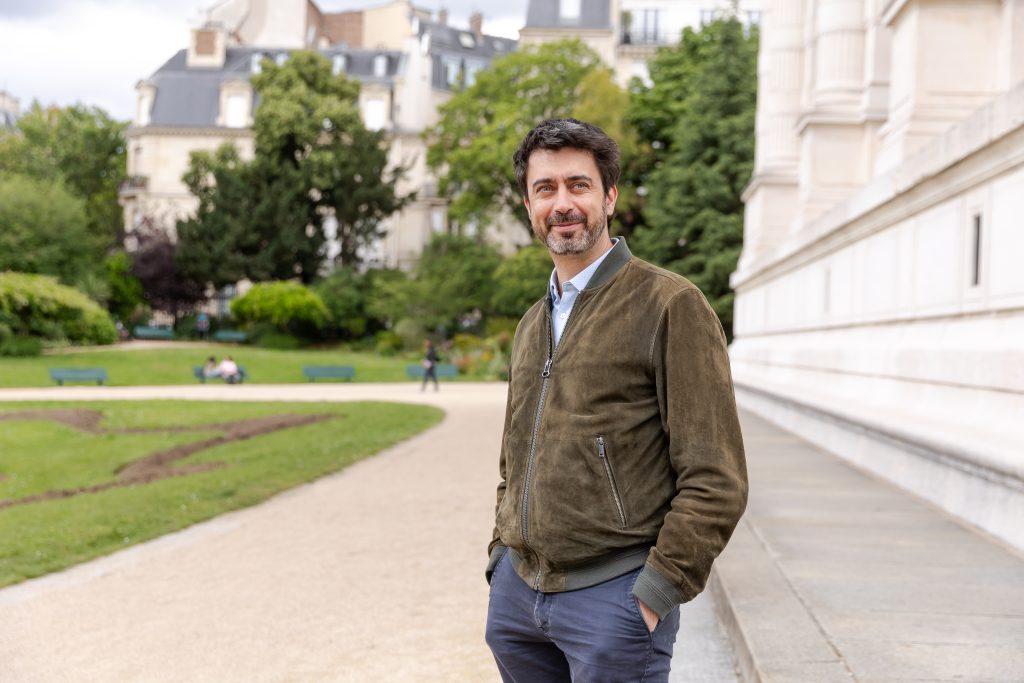
“Romania is a part of me. I don’t know, I feel at home. When I go there, I’m just like the Romanians, very critical of what’s happening there, I follow the news from there, I just don’t have citizenship to be able to vote. Maybe I’ll get it, who knows. I’ve never really thought about it. I feel like it would be a beautiful symbol. I don’t know how much I actually feel Romanian. In a way, I think I became one without meaning to. It happened naturally, to the point where it’s just a part of me.”
This article is part of the”French week” series, a project by Cultura la Dubă, supported by BNP Paribas